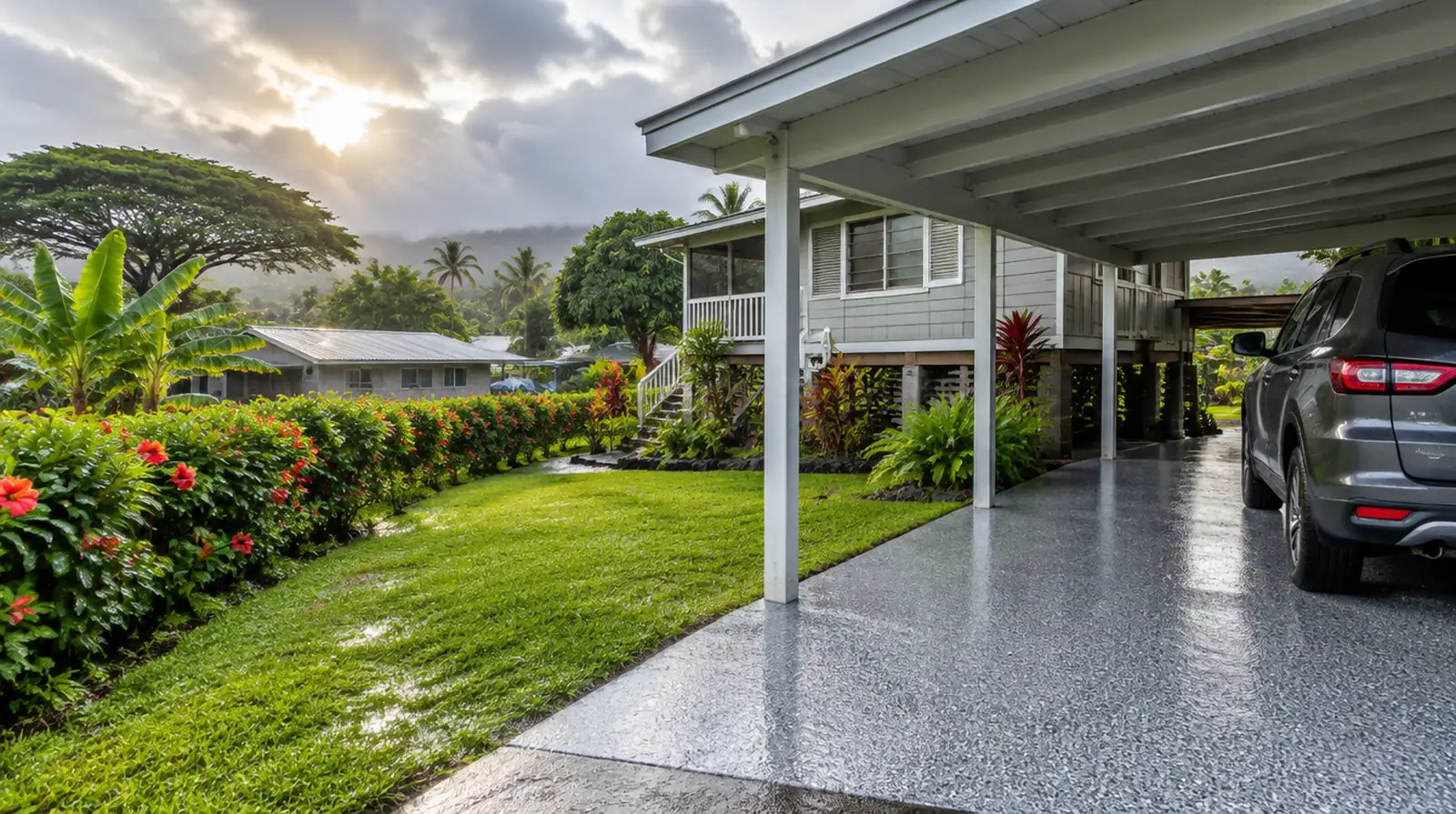
What polyaspartic offers
Polyaspartic is an aliphatic polyurea coating. It cures much faster than traditional epoxy, stays flexible, resists abrasion and does not yellow in sunlight. For carports and lanais where daylight reaches the floor, and for families who need their garage back quickly, it is often the best choice for the wear layers of a floor system.
Fast cure in a humid climate
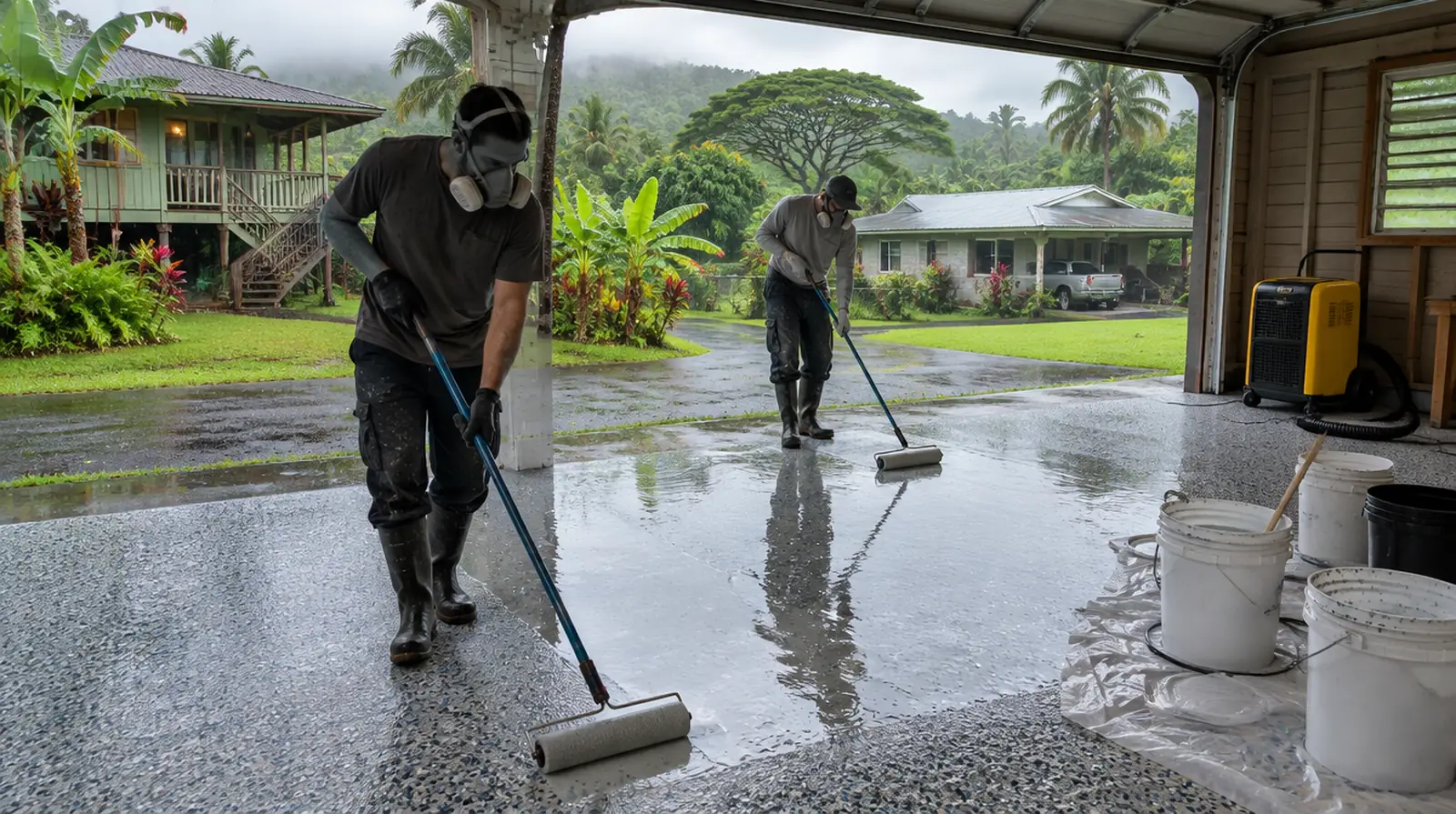
Humidity slows many coatings. Polyaspartic actually uses moisture in the air as part of its cure, so it sets quickly even on humid days. That said, the short working time means it must be mixed in small batches and applied smoothly by an experienced crew. Weather forecasting matters for exposed carports; we plan around showers and protect the work when needed.
Why we still use an epoxy primer
Polyaspartic does not block vapor rising through a damp slab. Since most slabs here are damp, our standard approach is a moisture-mitigating epoxy primer first, followed by polyaspartic base and top coats. This combines the bond security of epoxy with the speed and UV resistance of polyaspartic. Testing determines the exact build.
Sun at the edge of the roof
Even on rainy days, ultraviolet light reaches the outer edges of carports and lanais. Aromatic epoxy exposed to it turns amber and chalky. Polyaspartic stays clear and color-stable, which is why we use it as the topcoat on virtually every exterior-facing floor we coat.
Finishes
Polyaspartic works with solid colors, flake and quartz broadcasts. Most carports and garages get a flake system for texture and dirt hiding. It is also our preferred clear topcoat over epoxy garage floors. Grit is added on exterior floors for traction.
Typical schedule
With a moisture-mitigating primer, most garages and carports finish in one and a half to two days. Without it, on a dry interior slab, some floors finish in one day. Foot traffic is usually fine that evening or next morning, and vehicles return in about one to two days.
Durability
Polyaspartic resists oil, gasoline, brake fluid, cleaning chemicals and abrasion. It does not chalk outdoors. Properly installed and maintained, it lasts many years.
Cost
Materials cost more than standard epoxy, but fewer labor days offset some of the difference. Final price depends on area, preparation, moisture mitigation and finish.
Care
Hose off mud, scrub with a neutral cleaner, and wipe fluids promptly. A clear recoat refreshes the surface later.
Questions
Is polyaspartic better than epoxy? For UV and speed, yes. For bonding to damp concrete, an epoxy primer is still best underneath.
Is there a smell? Some during application. We ventilate, and it fades quickly.
Can you install during the rainy season? Yes, with careful scheduling for exposed areas.
Lanais and covered patios
Covered lanais are where many families spend their time, and they take blowing rain, wet feet, potted plants and outdoor furniture. A polyaspartic flake system with traction grit turns a plain gray slab into a finished outdoor room that rinses clean easily. Because the topcoat does not yellow, the colors remain true near the open edge where daylight is strongest. We pay attention to slope so water runs off rather than pooling, and we finish edges cleanly where the slab meets posts, railings and steps. Planters should sit on feet or saucers to keep constant moisture from resting on one spot.
Comparing coatings
Standard epoxy is affordable and bonds well but yellows outdoors and cures slowly. Polyurethane topcoats resist UV but need longer recoat windows. Polyaspartic combines fast cure, UV stability and good abrasion resistance. For most carports, lanais and garages that get daylight, we build a system with an epoxy primer and polyaspartic layers above, because that combination solves the most problems.
Color stability
Clear polyaspartic topcoats stay clear for years, so the colors of your flake blend remain the same as the day the floor was finished.
Odor and ventilation
We open doors, run fans and keep occupants out of the work area during application.
Book a fast-cure floor
Call (808) 825-6078 for a free estimate.