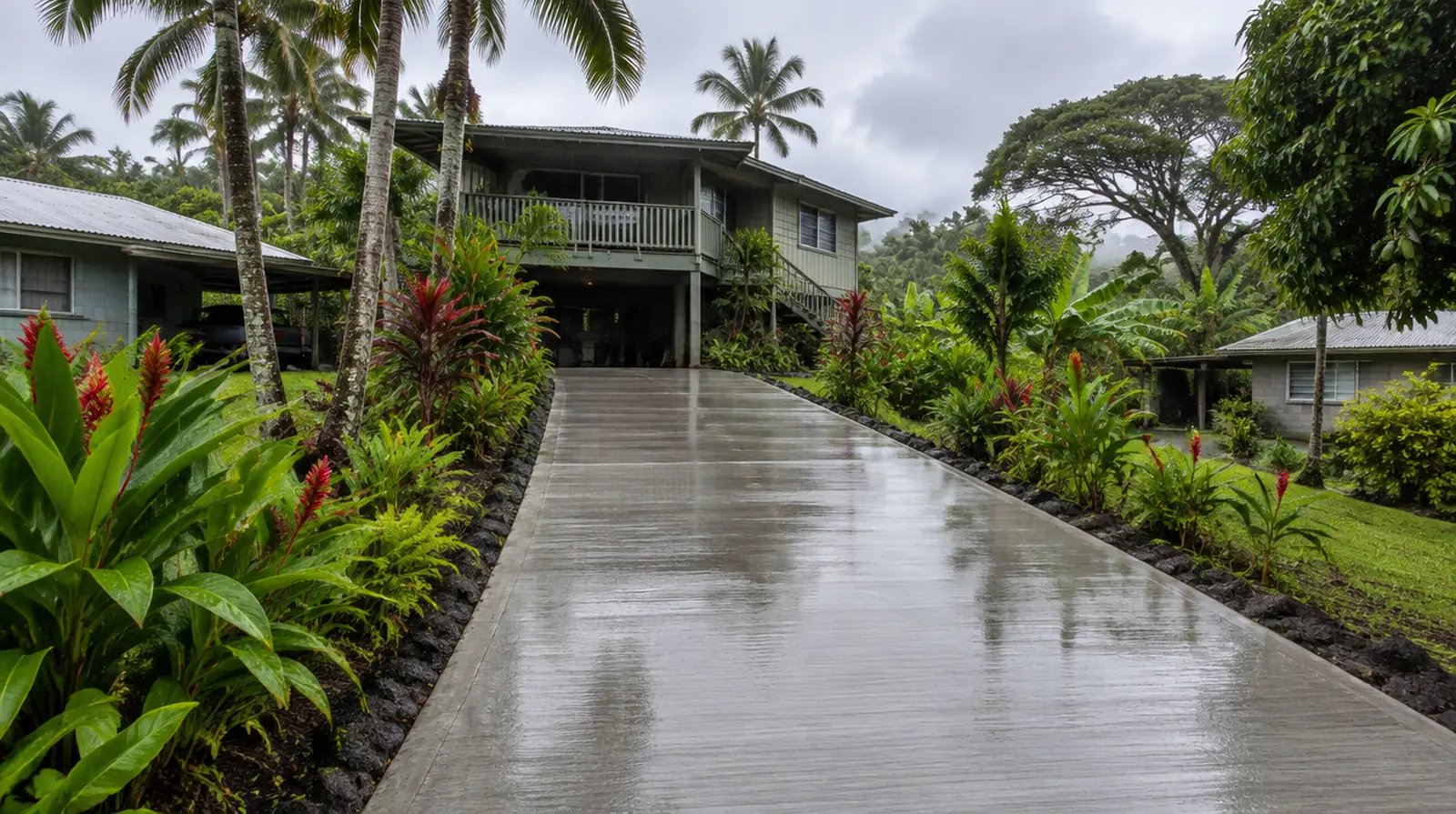
Driveways in a wet town
Many driveways here are steep, shaded and wet for long stretches. They grow moss and algae, turn slippery, and soak up red dirt washed down from yards. Older driveways show worn surface paste, exposed aggregate, cracks and patches of different colors. A thoughtful resurfacing and sealing plan brings them back while keeping them safe to walk and drive on in the rain.
Traction comes first
Glossy coatings on a sloped, wet driveway are dangerous. We do not install smooth films on driveways. Instead, we favor textured cementitious overlays with a broom or spray-knock finish and penetrating sealers that keep the natural grip of concrete. Where a decorative finish is wanted, it is textured and grit-loaded.
Resurfacing
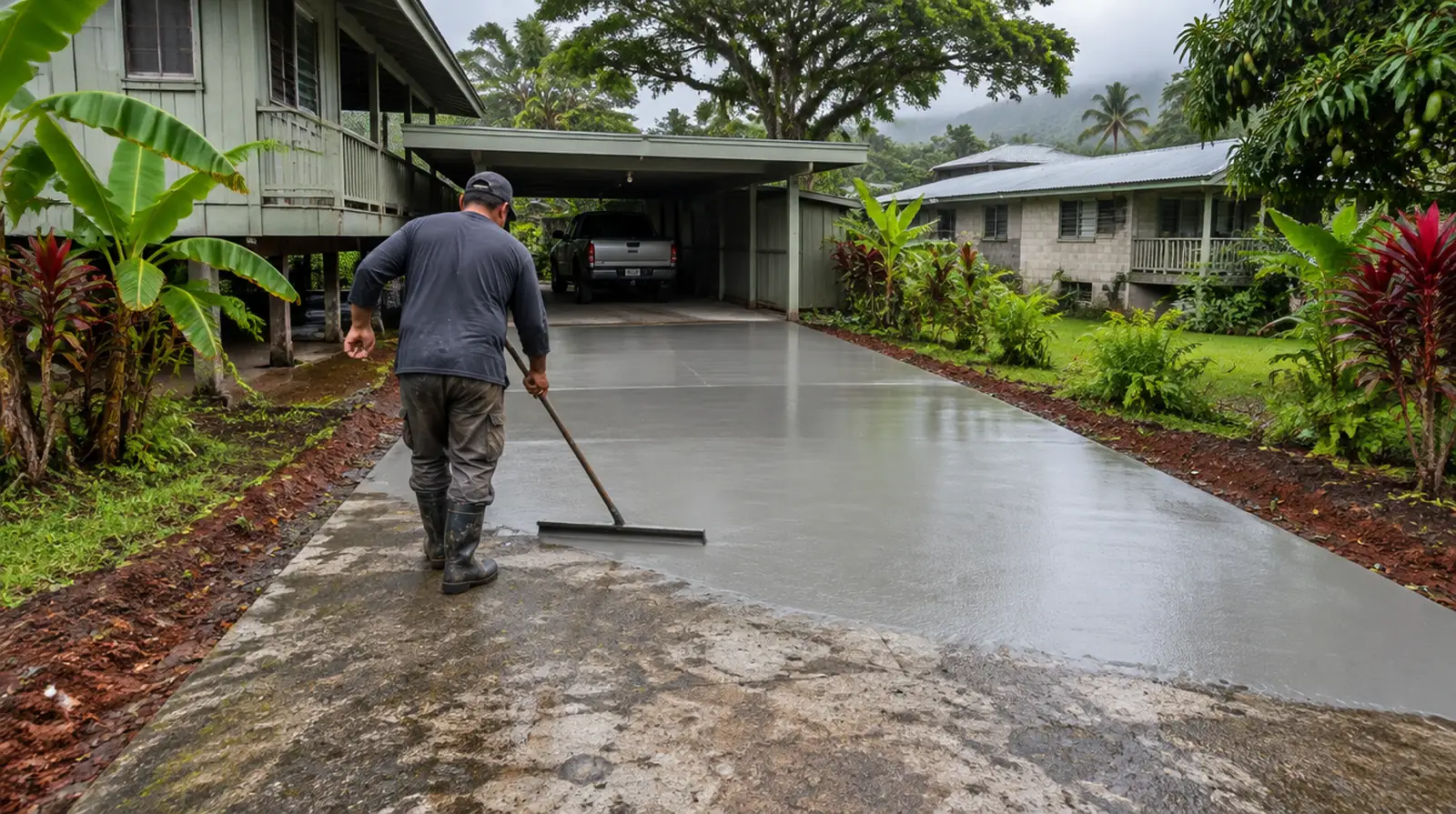
Polymer-modified overlays bond to existing sound concrete and restore a uniform surface. We pressure wash, treat growth, repair cracks and spalls, prime and apply the overlay, then texture it for traction. Overlays hide patches and wear and refresh the look of the property.
Stain removal
Red dirt contains iron and binds stubbornly to concrete. Specialized cleaners lift much of it, though the oldest stains may only fade. Oil spots are degreased, and heavy oil is ground out before overlaying. Moss and algae are treated with cleaners that kill spores so regrowth is slower.
Sealing
A breathable silane or siloxane sealer after cleaning or resurfacing slows water absorption, growth and staining. See our sealing page for details on choosing products.
Cracks and drainage
Hairline cracks are routed and filled. Structural problems such as heaved or sinking sections are noted, and we let you know when slab replacement is wiser than resurfacing. We also check where roof and yard runoff crosses the driveway, since redirecting water reduces staining and growth.
Timeline
Most driveway resurfacing takes one to two days of work plus curing. Foot traffic is usually fine within a day and vehicles in several days. Sealing alone often takes one visit. We schedule around rain.
Cost
Pricing depends on size, slope, repairs, stain treatment and whether resurfacing or sealing alone is needed.
Care
Rinse regularly, clear leaves and treat green growth early. Reseal every few years.
Questions
Will an overlay be slippery? We texture it for grip.
Can red dirt stains be removed? Much of it can; very old stains may fade instead of disappearing.
Can you coat a carport and driveway together? Yes, often with different systems for each.
Exposed aggregate driveways
Many driveways here have exposed aggregate finishes, where stones show at the surface. These offer good traction but trap moss and dirt between stones. We clean them deeply with rotary surface cleaners and treatments, then seal with a penetrating product that keeps the texture. If the aggregate is loose or the surface is heavily worn, an overlay may be a better choice, though it will change the look.
Carport and driveway transitions
Where a coated carport meets a sealed or resurfaced driveway, we design a neat transition, often with a slight change in texture so water does not run under the coating edge. Clean lines keep the work looking finished.
Curb appeal
A refreshed driveway is among the most visible improvements to a property. Pairing resurfacing with sealing gives a clean, uniform look that holds up to heavy rain.
Walkways and steps
Many clients include front walkways and steps in the same project. We treat each surface for growth and texture it for safe footing in the rain.
Drainage on sloped lots
Hillside lots send a lot of runoff across driveways during downpours. Before resurfacing, we look at where water enters and leaves the slab. Saw-cut grooves, trench drains or a slight change in finish texture can direct water away from the garage and keep the surface from staying slick. Fixing these details during the job costs far less than correcting them after the new surface is down, and it helps the coating last longer.
Fix my driveway
Call (808) 825-6078 for a free estimate.