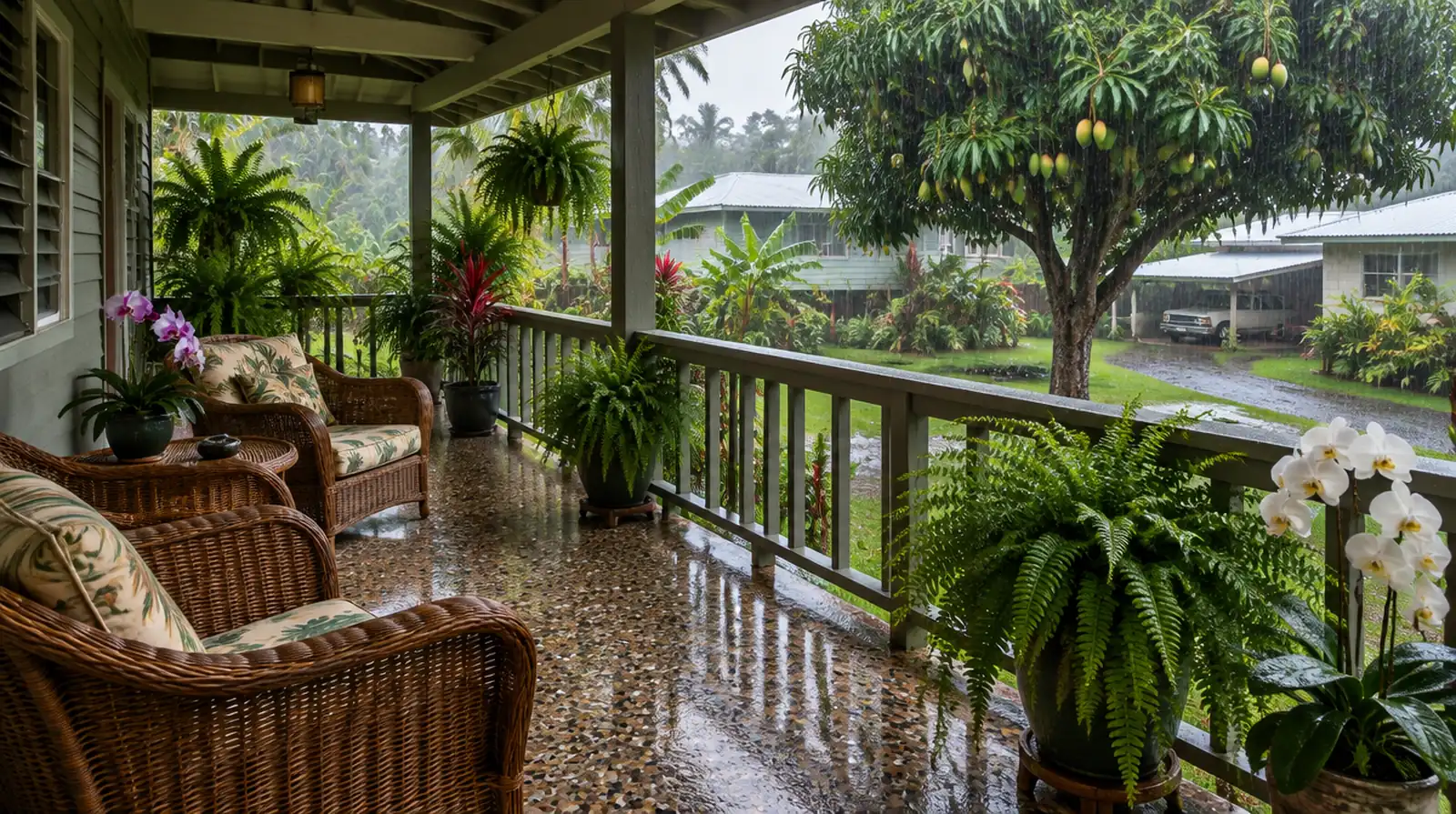
Why flake works so well on the wet side
Red volcanic dirt, wet leaves, mud from slippers and boots and the occasional gecko track all show on a solid-color floor. A flake floor camouflages them. Its random speckled pattern hides everyday dirt between cleanings, and the chip texture provides better grip on damp days than a smooth coat. For carports, lanais and garages that see constant foot traffic from the yard, it is the most practical decorative finish we install.
Flake also hides imperfections. Older slabs here often have patched areas, uneven color and old stain shadows. A full broadcast covers them completely.
Building a flake floor
We prepare the slab as we would for any coating: moisture test, diamond grind and repair. On most local slabs, a moisture-mitigating primer comes next. Then we roll a pigmented base coat and, while it is wet, broadcast vinyl flakes until the surface is fully covered. After the base cures, we scrape off loose flakes, vacuum and roll a clear topcoat with grit added for traction. The topcoat seals the chips and provides UV, chemical and abrasion resistance.
Chip size and color
Quarter-inch chips are standard for garages and carports. Smaller sizes give a finer, stone-like look indoors. Earthy blends with browns, tans and black hide red dirt best. Gray and white blends brighten a dim garage. Some customers choose blues and greens to echo the ocean and landscape. We bring sample boards to compare.
Spaces we coat
Carports. Our most common flake job, with traction grit and UV-stable topcoats.
Lanais. Covered concrete lanais become cleaner and brighter, and resist mildew better than bare concrete.
Garages. Enclosed garages for parking, storage and workshops.
Laundry and mud rooms. Water-resistant, easy-to-clean floors near the back door.
Small businesses. Shops, break rooms and service areas. Heavier systems are on our commercial page.
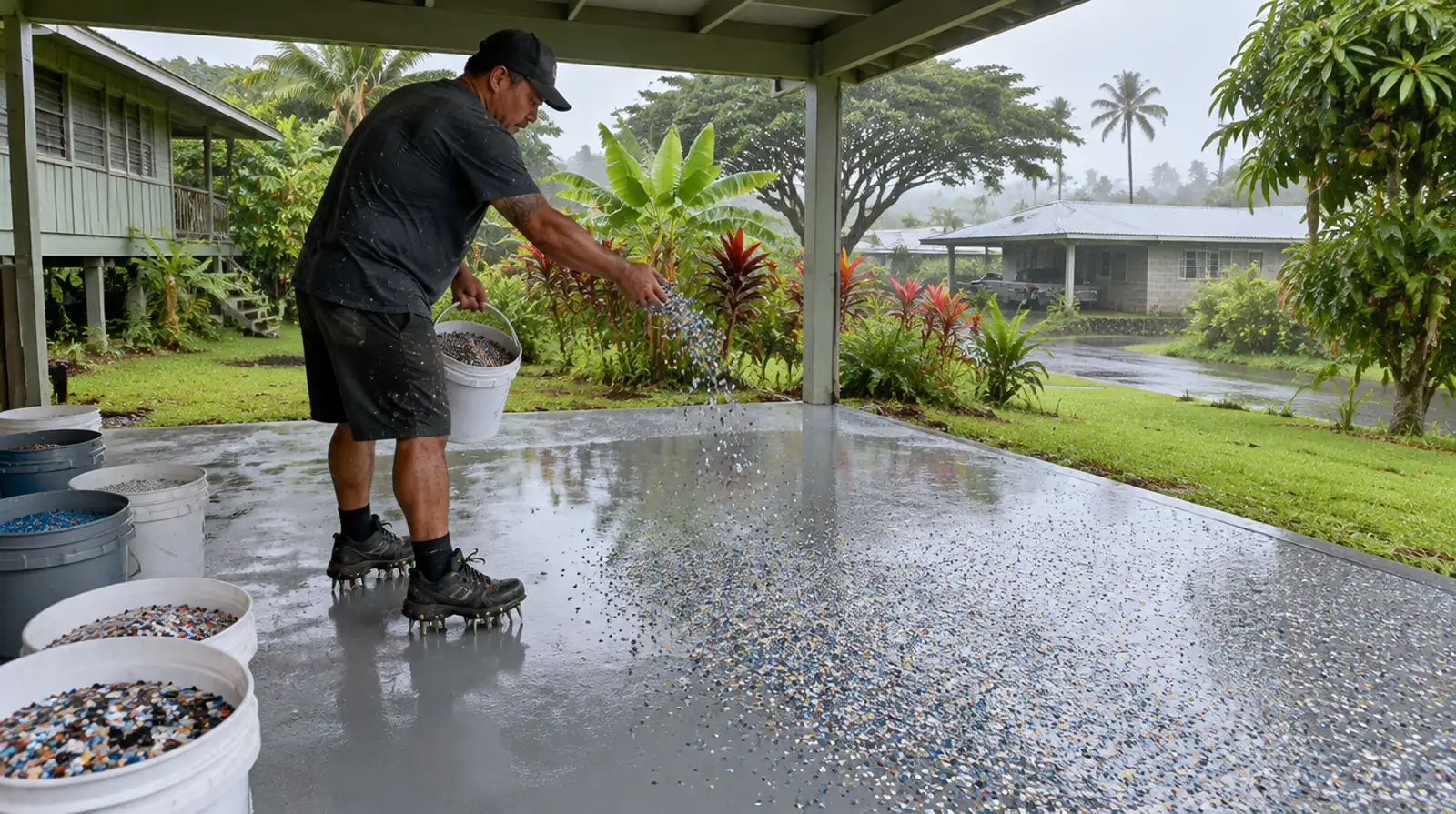
Traction on wet floors
Wet floors are a daily reality, so we treat traction seriously. The chip texture itself helps, and we add an aggregate to the topcoat on exterior and semi-exterior floors. We can adjust the texture: more grit for steps and entries, less for interior rooms where easy mopping matters more.
Moisture and adhesion
A flake floor is only as durable as its bond. We never skip moisture testing. When readings are high, a vapor-blocking primer goes down first so the flake system stays attached even when the ground is soaked for weeks.
Timeline
Flake systems typically take one to three days depending on primer, base and topcoat products and on the humidity. We schedule exterior work around rain forecasts. Foot traffic is usually fine the next day.
Cost
Cost depends on area, preparation, moisture mitigation, chip size and topcoat. Full broadcast uses more chips but gives the best texture and durability. Estimates are itemized.
Care
Hose off or sweep dirt and leaves, then scrub with a neutral cleaner. Clean shaded corners regularly to keep mildew from getting started. A clear recoat later refreshes the surface.
Questions
Does flake feel rough on bare feet? It feels lightly textured. We can make it smoother for indoor rooms.
Will it fade in the sun? Not with the UV-stable topcoats we use.
Can it go on a lanai with a slight slope? Yes. Slopes help drainage, and we keep it that way.
Flake floors for raised homes and ground-level storage
Many older homes in town sit on posts, with a concrete slab underneath used for parking, laundry, tool storage or a small workshop. These ground-level areas stay damp, collect windblown leaves and often have uneven, patched concrete. A flake system is a practical upgrade for them. After grinding and a moisture-mitigating primer, the broadcast flake hides the uneven tone of old patches and gives a uniform, finished look. The textured surface keeps footing secure when rain blows in, and the sealed floor no longer releases concrete dust onto stored items.
We also coat laundry slabs, outdoor showers under cover, and storage rooms in block homes. In each case we look at how water reaches the floor, whether from roof drip lines, hoses or wet feet, and adjust grit levels and edge details to suit. Where the slab meets wooden posts or walls, we carefully mask and seal transitions so water does not sit at the joint. The result is a space that is easier to sweep, rinse and keep free of mildew.
Choosing flake size
Smaller flakes give a fine granite look, while larger chips read boldly from a distance. Full broadcast floors with medium chips are the most forgiving of dirt and wear.
Price a flake floor
Call (808) 825-6078 for a free estimate.