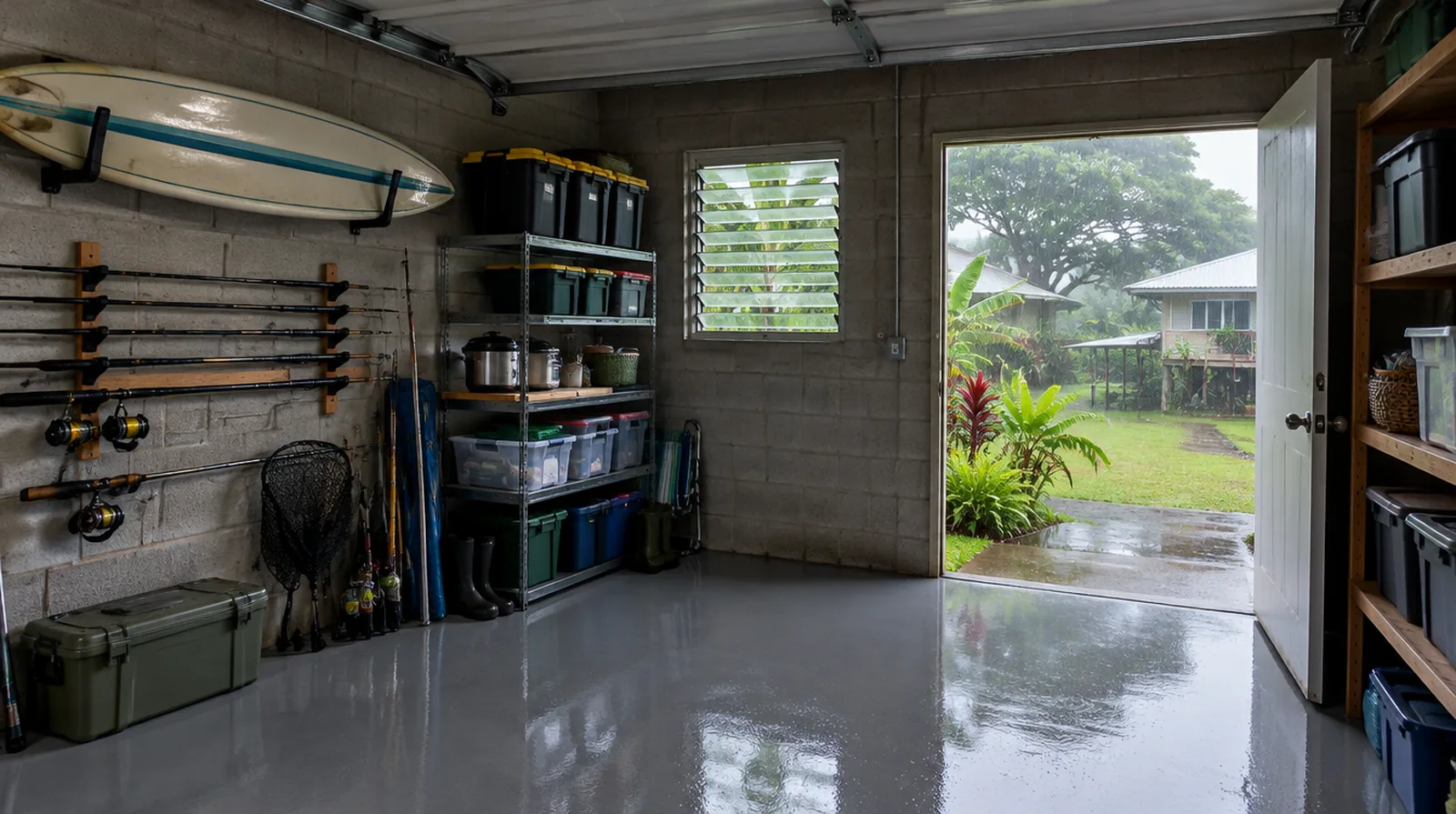
The usual garage floor problems here
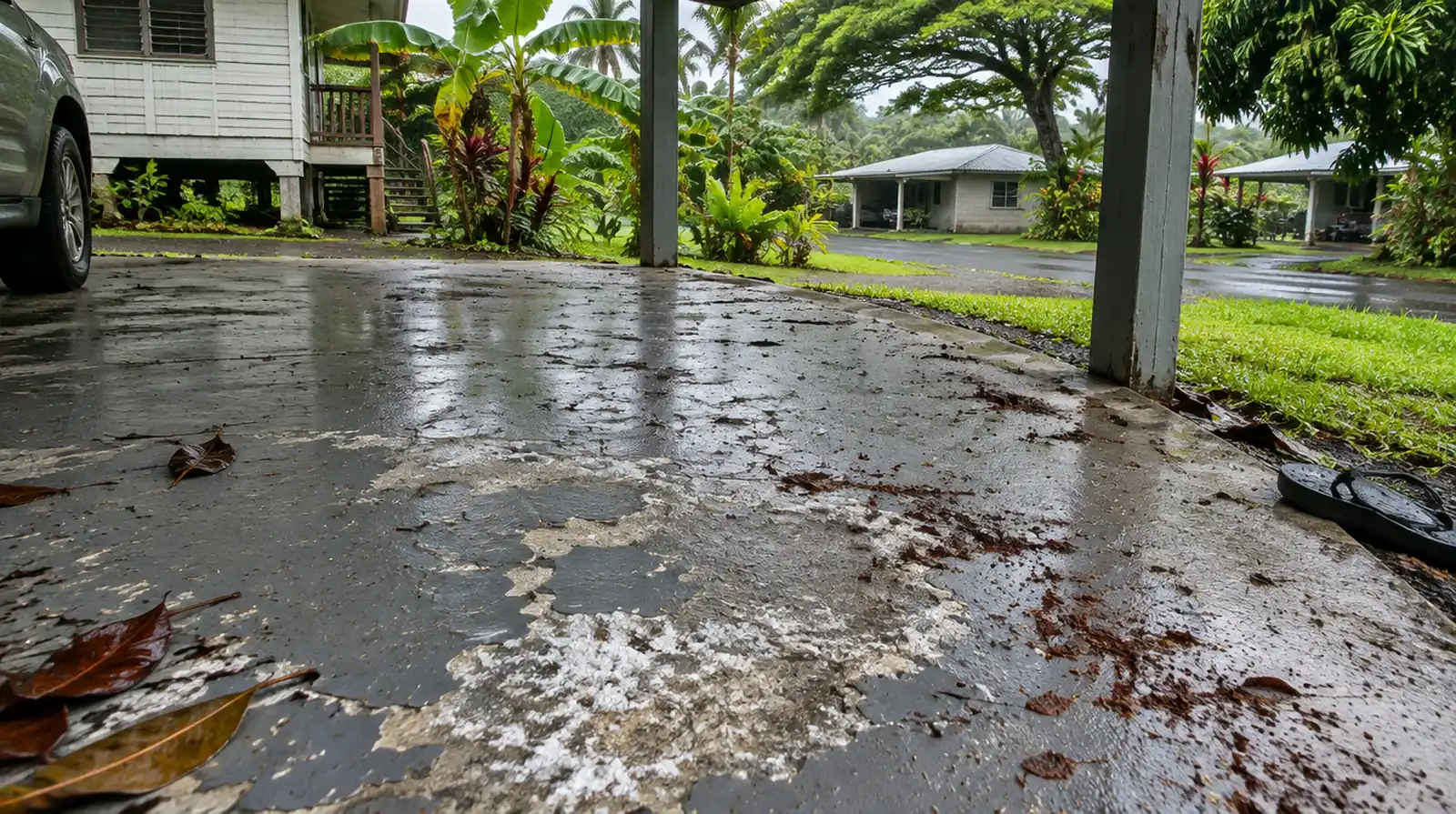
Most garages and carports in town share a few traits. The slab is damp much of the year. Mud from yards and unpaved driveways gets tracked in. Old porch paint blisters and peels. Mildew darkens the corners. Leaves blow in and stain the surface. Oil from vehicles soaks into bare spots. Carports in particular sit half in the weather, so rain splashes the slab and afternoon sun reaches the edge.
A garage epoxy system built for these conditions seals the concrete, cleans with a hose, resists stains and brightens the space. It turns a muddy pad into a usable room for parking, storage, laundry or a workshop.
How we install it
Testing. Moisture is measured before anything else. Because most slabs here run high, the reading usually determines which primer and how many coats we use.
Grinding. A planetary diamond grinder removes old paint, mildew, mud residue and the weak surface layer, leaving an open profile. A dust extractor keeps the work clean.
Repairs. We fill cracks with polyurea, patch spalls and pits with epoxy mortar and grind repairs flush.
Moisture mitigation. A vapor-blocking epoxy primer bonds to damp concrete and keeps moisture from lifting the layers above.
Body coat. A pigmented epoxy builds color and thickness.
Topcoat. A clear aliphatic polyaspartic or urethane resists UV, scratches and chemicals. On carports and wet entries, we mix in grit for traction.
Why moisture mitigation pays off
A moisture-mitigating primer costs more than a standard one, and it adds a step. It is also the difference between a floor that lasts and one that blisters. In a dry climate, many installers can skip it. Here, skipping it is the most common reason coatings fail. We would rather explain the added cost upfront than come back to tear out a failed floor.
Carports versus enclosed garages
Carports get rain on the edges, wind-blown leaves and direct sun. We always use UV-stable topcoats and traction grit on carports, and we pay close attention to drainage so water runs off rather than pooling. Enclosed garages are more protected but often more humid inside, so moisture control under the coating matters just as much.
Choosing colors
Medium gray and tan hide dirt well. Many customers prefer a flake finish, which disguises red dirt and mud between cleanings and adds texture. Light colors brighten dim garages but show mud more. We bring samples so you can see them in your space.
Garages as living space
Island garages often serve as laundry rooms, storage for fishing and surf gear, extra freezer space, workshops or gathering spots. A sealed, coated floor makes all of those uses cleaner. Tell us what you plan to keep in the space so we can recommend the right texture and chemical resistance.
Timeline and cure
Most two-car garages take two to three days with an epoxy system. Humidity slows cure, so we plan conservatively. Foot traffic is usually fine within a day, vehicles in two to three days and heavy chemicals after a week. For carports, we schedule around forecast rain and protect the work if a shower moves in.
Pricing
Price depends on size, removal of old coatings, repairs, moisture mitigation and the finish. Because moisture mitigation is common here, we include it in most estimates and explain why. Every estimate is itemized.
Care
Hose off mud and leaves, scrub with a neutral cleaner, and clean mildew-prone corners regularly. Use a mat at the door. Wipe oil promptly. A fresh topcoat in later years restores protection and gloss.
Common questions
Can you coat over old paint? No. We grind it all off first.
Will the floor sweat? On very humid days, any smooth surface can collect condensation. Texture helps with grip.
Is my slab too wet? Rarely, but testing tells us. If it is beyond product limits, we discuss options like polishing or sealing.
Get a garage floor estimate
Call (808) 825-6078 for a free estimate.