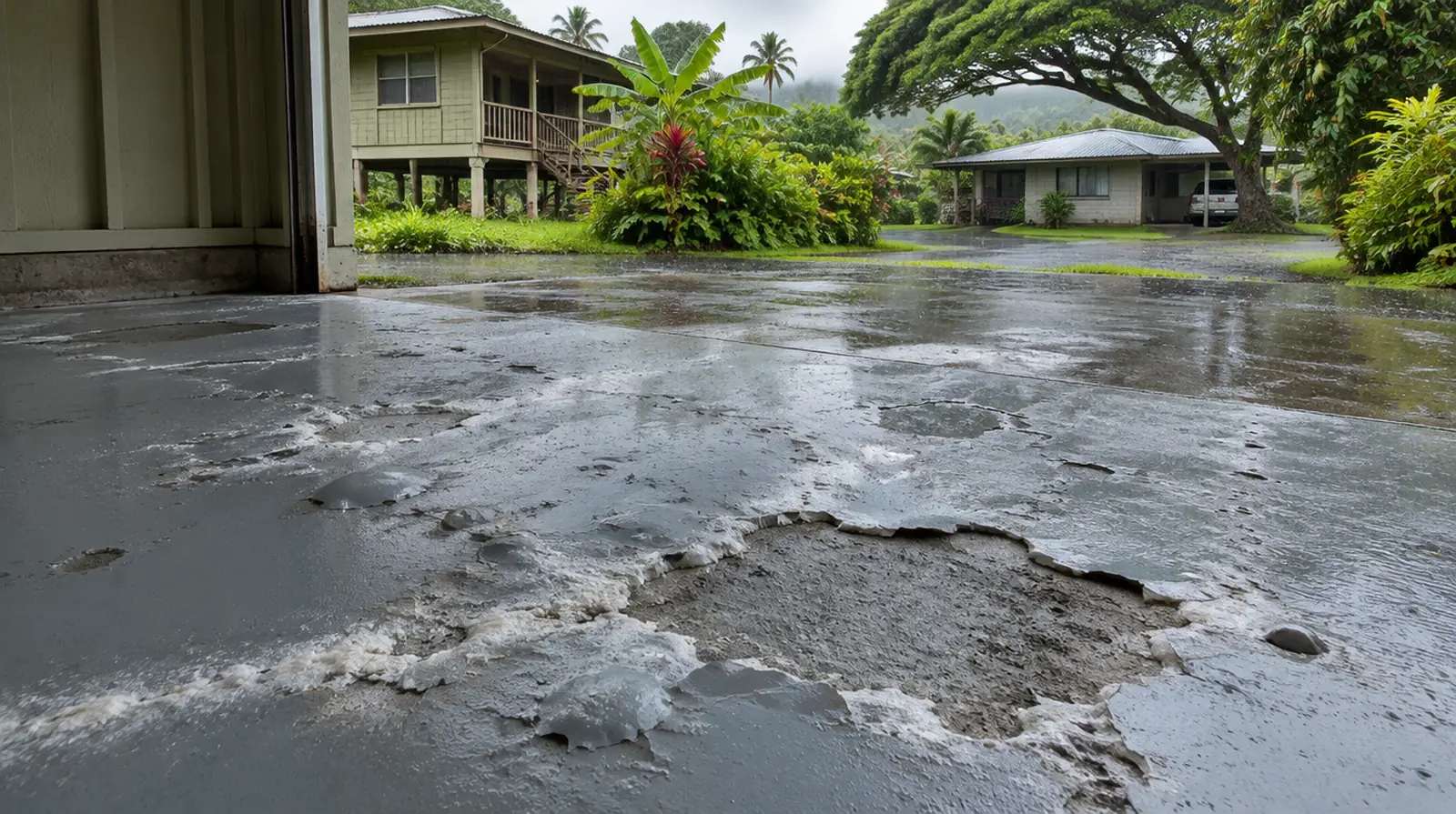
Why coatings fail here
Most failing floors we inspect share one cause: moisture. Vapor rises through the slab, collects under the coating and pushes it up into blisters. Minerals carried with the moisture crystallize under the film and break the bond. Peeling then spreads from the edges and from the blisters. Other common causes include weak preparation, such as acid etching instead of grinding, store-bought kits too thin for vehicle traffic, and sun-yellowed epoxy topcoats at carport edges.
Our diagnosis
Before quoting, we examine the floor, test moisture in several spots, check the bond around failures and look for drainage problems around the home. Sometimes the problem is local, such as a downspout dumping water near the slab. Sometimes it is the whole slab. We explain what we find and whether repair or full replacement makes more sense.
Repair options
Spot repair. For small, isolated failures on an otherwise sound floor, we cut back to bonded coating, grind, prime and rebuild the area to blend as closely as possible.
Recoat. When the floor is bonded but dull, faded or scratched, we abrade the surface and apply a new polyaspartic topcoat. It is quick and economical.
Full removal and new system. When failure is widespread, we grind off everything, address moisture with the right primer and install a complete new floor.
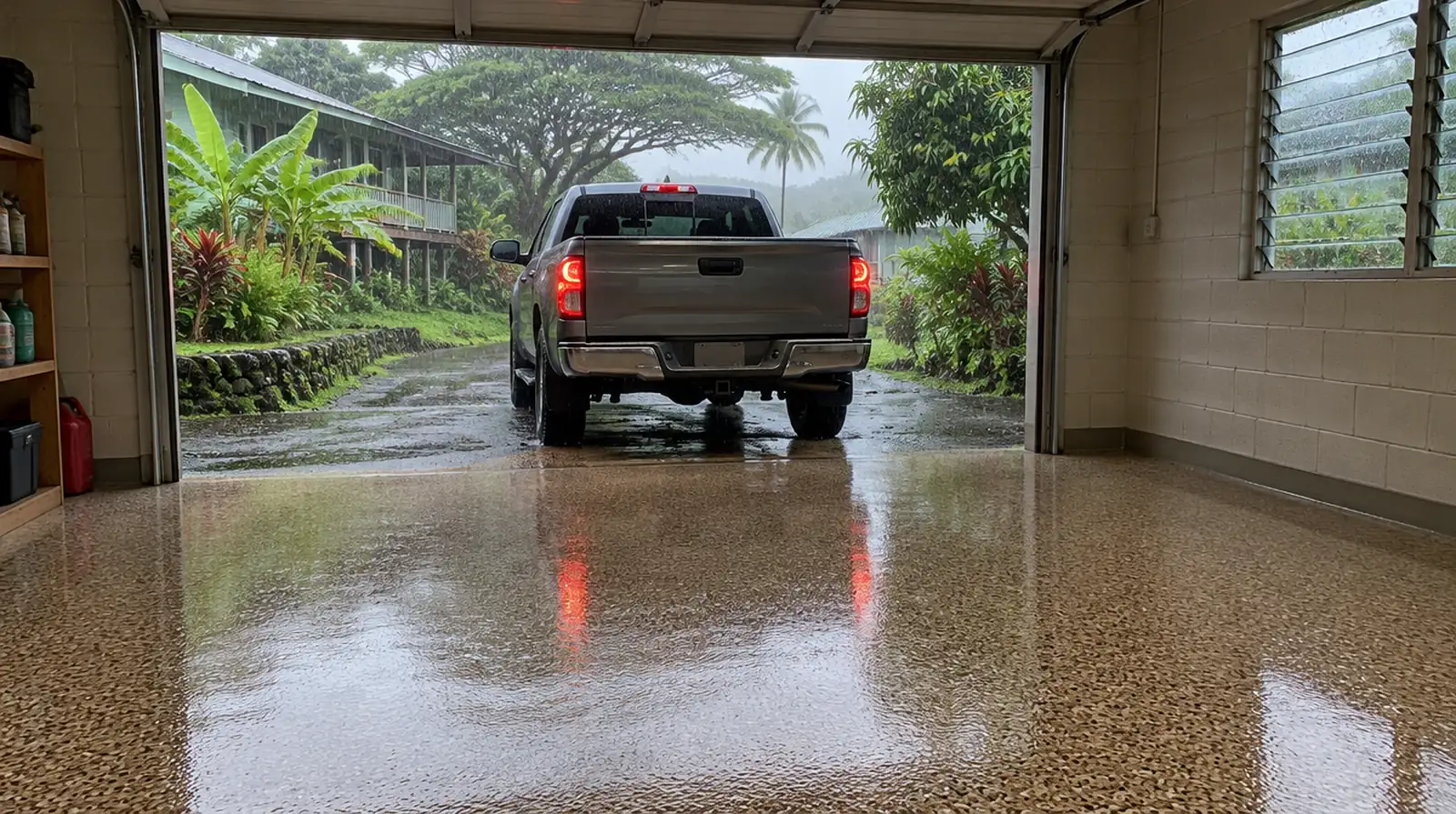
Cracks, spalls and pits
Old slabs often have cracks and chipped joints. We rout and fill them with flexible or rigid repair materials, patch spalled areas and level low spots before coating. Moving cracks get flexible treatment to limit telegraphing.
Fixing do-it-yourself kits
Kit coatings frequently peel under hot tires within a year or two, especially on damp slabs. Grinding them off and installing a professional system with a moisture primer is usually the solution.
Matching an existing floor
Exact color matches on aged floors are difficult. Where a repair would show, we may suggest recoating the whole room or adding a pattern that disguises the transition.
Preventing repeat failures
Diverting roof runoff, improving drainage and keeping water from pooling on the slab all help. Inside, mats and regular cleaning reduce wear. A periodic topcoat extends life.
Timeline and cost
Spot repairs are often finished in one day. Recoats take one to two days. Full replacements follow the timelines of a new installation. We provide clear options at different price levels.
Questions
Can you coat over my peeling floor? No. New material over failing coating will fail with it.
Will my floor blister again? Not when moisture is properly addressed.
Do you repair other contractors' floors? Yes.
White haze and efflorescence
A white, powdery haze appearing under or through a coating, or along cracks and edges, is efflorescence. It comes from mineral salts carried by moisture moving through the concrete. When it builds up under a coating, it pushes the coating away from the slab. Cleaning the haze from the surface does not solve the underlying cause. During repair we grind the salts away, test moisture and install a primer rated to resist vapor pressure. Outside, we suggest drainage improvements so less water reaches the slab in the first place.
Faded and yellowed carport floors
An epoxy floor that has turned amber or chalky near the carport opening has been damaged by sunlight. If the coating below is still well bonded, a light abrasion and a polyaspartic topcoat restore color and protect against further fading. If the coating is also lifting, removal is the better route.
Hot tire pickup
Thin coatings sometimes lift where hot tires sit. Repairs involve grinding the area, priming properly and building enough thickness to resist this.
Photos help
Sending photos before our visit helps us bring the right test equipment and repair materials.
Get my floor inspected
Call (808) 825-6078 for a free estimate.