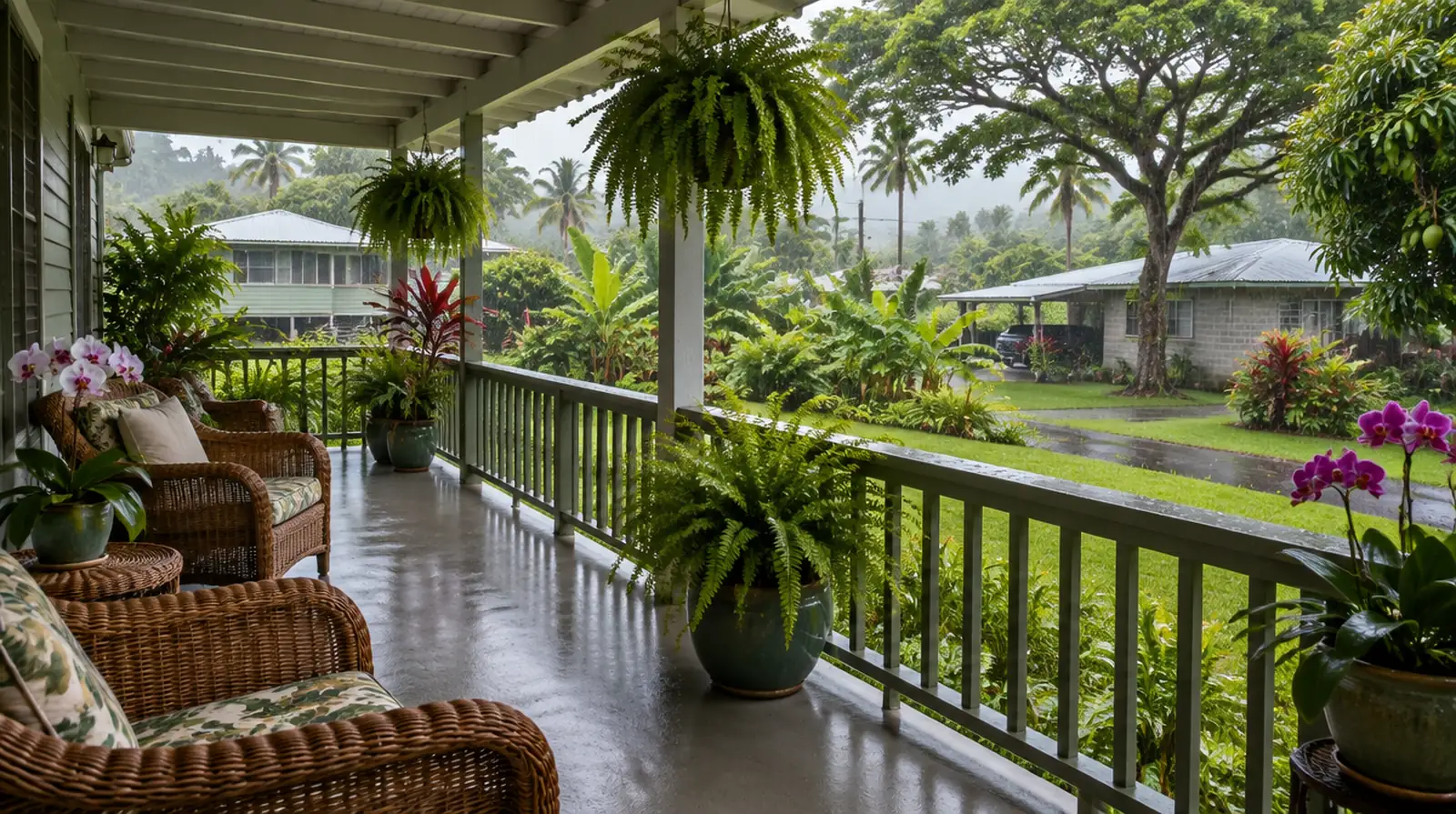
Concrete in constant rain
Outdoor concrete here stays wet much of the year. Moss, algae and mildew grow on walkways, steps and shaded lanais, turning them green, black and slippery. Red dirt stains surfaces. Water soaking into the slab carries minerals that leave white haze. Over time, porous concrete wears, pits and grows ever harder to clean.
What sealing achieves
A sealer reduces how much water the concrete absorbs. Less water means slower growth of mold and moss, fewer stains and easier cleaning. Some sealers also add a light sheen or deepen color. Sealing does not stop all growth in shaded wet areas, but it makes cleaning much easier and extends the life of the surface.
Choosing the sealer
Penetrating silane or siloxane. These soak in and repel water without forming a surface film. They breathe, so they do not peel on damp slabs, and they leave the surface looking natural. They are our first choice for most outdoor concrete in this climate.
Acrylic. Adds sheen and color enhancement but can trap moisture, turn cloudy and become slippery in wet climates. We use it sparingly and only where conditions allow.
Coatings. For covered lanais and patios wanting a finished look, a breathable-primed flake system with grit is an option.
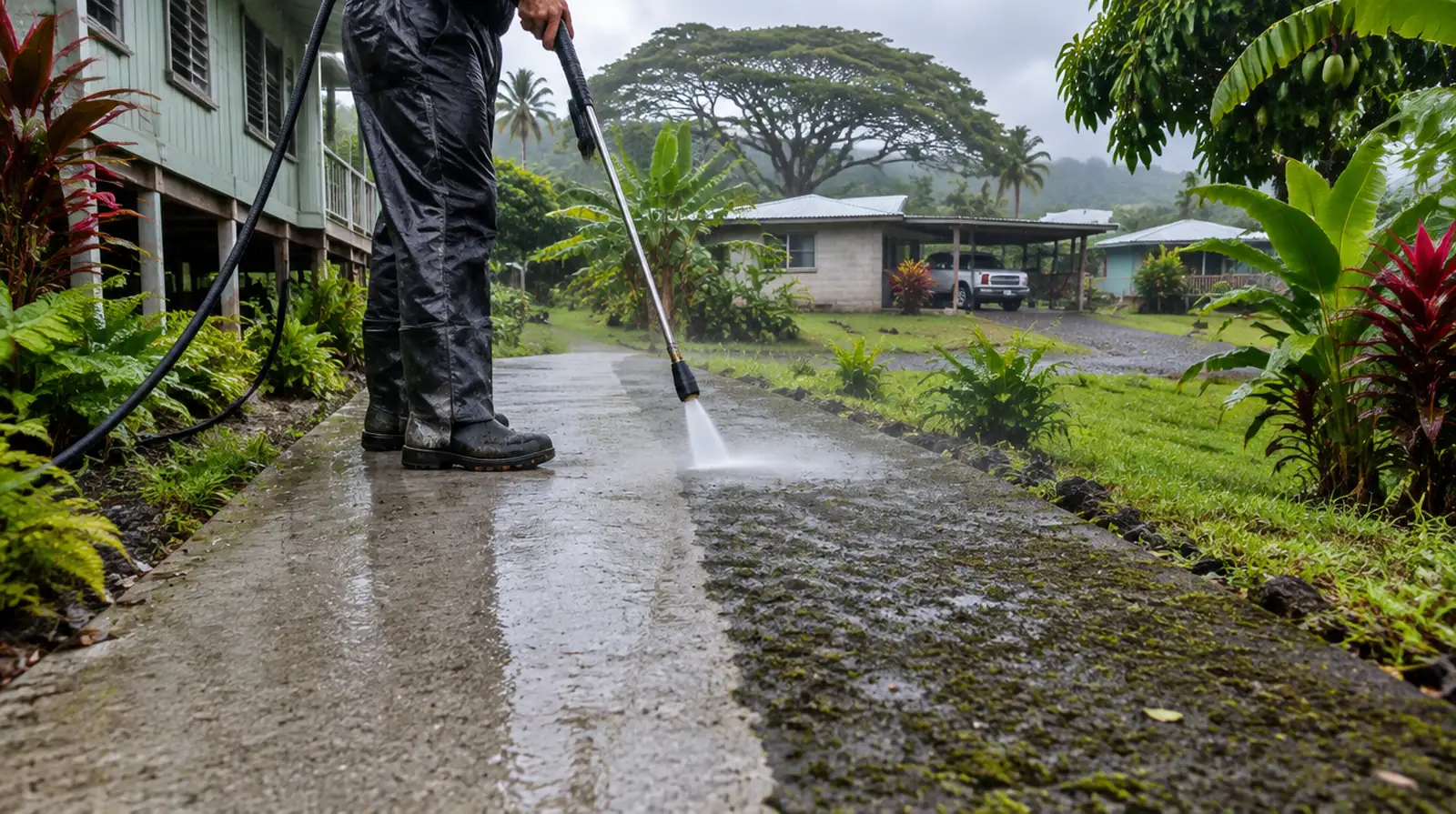
Preparation
We pressure wash thoroughly, treat moss and mildew with a cleaner that kills spores, remove stains where possible and let the surface dry enough for application. Weather timing matters; we watch the forecast for dry windows.
What we seal
Lanais, walkways, steps, pool decks, patios, driveways, carports, retaining walls and decorative concrete. We also seal interior slabs before flooring installations where appropriate.
Traction
Penetrating sealers keep the natural texture, so traction remains close to bare concrete. Where a film is used, we add grit.
How often to reseal
In this climate, penetrating sealers usually last a few years before the water bead fades. Resealing is quick because the cleaning is easier each time.
Care between sealing
Rinse surfaces regularly, trim plants that shade and drip on concrete, clear leaves promptly and treat new mildew early before it takes hold.
Cost
Sealing is one of the most affordable ways to protect concrete. Price depends on area, cleaning effort and product.
Questions
Will sealing stop moss completely? It slows it a lot, though shaded wet areas still need cleaning.
Is the surface slippery afterward? Penetrating sealers keep the original texture.
Can you seal in the rainy season? Yes, during dry windows.
Pool decks
Pool decks combine wet feet, chlorine or salt water and sunlight. Sealing a pool deck reduces staining and makes it easier to rinse, but the sealer must keep traction. Penetrating sealers work well on broom-finished and exposed aggregate decks. Decorative or stamped decks may benefit from a breathable, slip-resistant product. We avoid glossy films around pools for safety.
Retaining walls and block walls
Concrete and block walls absorb water and develop dark streaks, moss and mineral deposits. A penetrating water repellent reduces absorption and helps walls stay cleaner longer. We clean first and protect nearby plants, windows and painted surfaces during application.
Before installing interior flooring
When installing wood, vinyl or tile over a damp slab, a moisture barrier or sealer below the new flooring can reduce failures. We can test slabs and recommend products appropriate for the flooring you plan to install.
Environmentally conscious products
Many of our sealers are water-based and low in odor. We take care around gardens, ponds and streams, controlling runoff during cleaning and application.
How often to reseal
Constant rain and strong sun wear sealers faster than in drier climates. Penetrating sealers on driveways and walks usually need a fresh application every three to five years, while film-forming sealers on lanais may need attention sooner where water pools. A simple test tells you when: sprinkle water on the slab, and if it darkens instead of beading, it is time. We keep records of the products used on your property so recoats match.
Schedule concrete sealing
Call (808) 825-6078 for a free estimate.